Sarcoidosis, a systemic inflammatory disease characterized by noncaseating granuloma formation, typically presents with pulmonary involvement. However, atypical presentations, such as isolated splenic sarcoidosis, pose intriguing questions about disease pathogenesis and immunological targeting. A recent case report highlights such an instance, prompting us to consider the broader implications for understanding sarcoidosis as a spectrum disorder rather than a monolithic entity.
Why does sarcoidosis sometimes confine itself to a single organ? What unique immunological factors are at play in these isolated cases? Can studying these rare presentations offer clues to more effective, targeted therapies for all sarcoidosis patients?
Clinical Key Takeaways
lightbulb
- The PivotIsolated splenic sarcoidosis challenges the traditional view of sarcoidosis as a primarily pulmonary disease, pushing clinicians to consider extrapulmonary manifestations even in the absence of respiratory symptoms.
- The DataA small case series highlights the need for a nuanced approach to diagnosis, particularly when ACE levels are normal and other typical markers are absent.
- The ActionIn patients presenting with unexplained splenomegaly, clinicians should maintain a high index of suspicion for sarcoidosis, even if initial investigations are unrevealing, and consider splenic biopsy to confirm the diagnosis.
Sarcoidosis is notoriously protean, its clinical manifestations varying widely from asymptomatic hilar lymphadenopathy to severe, multisystem organ failure. While pulmonary involvement is the hallmark, extrapulmonary manifestations are common, affecting the skin, eyes, heart, and nervous system. Isolated splenic sarcoidosis, however, represents a particularly rare and diagnostically challenging presentation.
Diagnosis
Diagnosing isolated sarcoidosis of the spleen requires a high degree of clinical suspicion. Patients may present with splenomegaly, abdominal discomfort, or, in some cases, be entirely asymptomatic, with the diagnosis made incidentally during imaging for other indications. Elevated serum ACE (angiotensin-converting enzyme) levels and soluble interleukin-2 receptor levels are often used as supportive evidence, but these can be normal in isolated organ involvement, complicating the diagnostic picture. Ultimately, tissue biopsy, demonstrating noncaseating granulomas in the absence of other known causes of granulomatous disease, is required for definitive diagnosis.
Differential Diagnosis
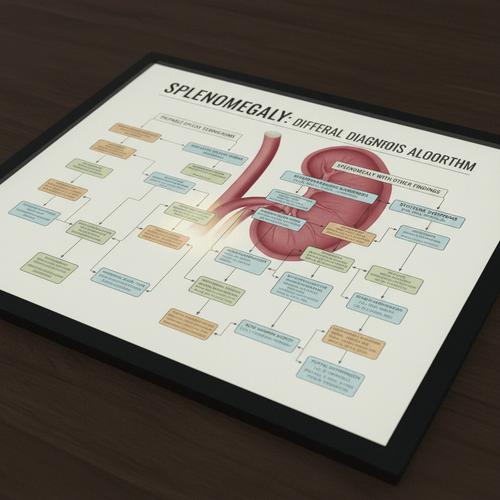
The differential diagnosis of splenomegaly and splenic lesions is broad, encompassing infectious diseases (such as tuberculosis, fungal infections), hematologic malignancies (lymphoma, leukemia), storage disorders (Gaucher disease), and other inflammatory conditions. Ruling out these possibilities is crucial before attributing splenic involvement to sarcoidosis. Given the association between sarcoidosis and certain malignancies, particularly lymphoma, careful exclusion of these conditions is paramount. This often requires bone marrow biopsy and thorough evaluation of peripheral blood.
The 2022 European Respiratory Society (ERS) guidelines emphasize a multidisciplinary approach to sarcoidosis diagnosis, stressing the importance of integrating clinical, radiological, and pathological findings. This approach is particularly relevant in cases of isolated organ involvement, where the absence of typical pulmonary findings can lead to diagnostic delays or misdiagnoses.
Treatment
The management of isolated splenic sarcoidosis is not well-defined, largely due to the rarity of the condition. In asymptomatic patients with mild splenomegaly, observation may be a reasonable approach. However, in patients with significant symptoms or evidence of progressive disease, treatment is warranted. Corticosteroids are the mainstay of therapy, often resulting in significant improvement in symptoms and resolution of splenomegaly. In patients who are refractory to corticosteroids or who experience unacceptable side effects, steroid-sparing agents such as methotrexate, azathioprine, or TNF-alpha inhibitors may be considered. Splenectomy is rarely necessary but may be indicated in cases of severe, refractory disease or diagnostic uncertainty.
Limitations
Case reports, while valuable for highlighting rare presentations, suffer from inherent limitations. The lack of controlled studies and standardized diagnostic criteria makes it difficult to draw firm conclusions about the optimal management of isolated splenic sarcoidosis. Furthermore, the potential for publication bias, with a tendency to report unusual or dramatic cases, may overestimate the prevalence and severity of this condition. The biggest catch? It’s impossible to generalize from a single case. More prospective studies are needed to elucidate the natural history of isolated splenic sarcoidosis and to identify factors that predict disease progression or response to therapy.
Prognosis
The prognosis of isolated splenic sarcoidosis is generally favorable, particularly with prompt diagnosis and appropriate treatment. However, long-term follow-up is essential to monitor for disease recurrence or progression to systemic sarcoidosis. Patients should be educated about the potential for extrapulmonary manifestations and advised to seek medical attention if they develop new or worsening symptoms. Regular monitoring of serum ACE levels and liver function tests may be helpful in detecting subclinical disease activity.
The rarity of isolated splenic sarcoidosis means there are no specific billing codes for it. This can create administrative headaches when seeking reimbursement for diagnostic procedures like splenic biopsies, which are already costly. Furthermore, the lack of clear treatment guidelines means that decisions are often made on a case-by-case basis, potentially leading to variability in care and increased financial burden for patients.
Clinicians should also be aware that while steroids are effective, their long-term use can lead to significant side effects, increasing the need for careful monitoring and potentially adding to healthcare costs. Consider methotrexate early in treatment to avoid long-term steroid toxicities.
LSF-4409754591 | December 2025

How to cite this article
Webb M. Splenic sarcoidosis: a window into systemic immunity?. The Life Science Feed. Published December 30, 2025. Updated December 30, 2025. Accessed April 1, 2026. https://thelifesciencefeed.com/infectious-diseases/tuberculosis/insights/splenic-sarcoidosis-a-window-into-systemic-immunity.
Copyright and license
© 2026 The Life Science Feed. All rights reserved. Unless otherwise indicated, all content is the property of The Life Science Feed and may not be reproduced, distributed, or transmitted in any form or by any means without prior written permission.
Fact-Checking & AI Transparency
This content was produced with the assistance of AI technology and has been rigorously reviewed and verified by our human editorial team to ensure accuracy and clinical relevance.
References
- American Thoracic Society. (1999). Statement on sarcoidosis. American Journal of Respiratory and Critical Care Medicine, 160(2), 736-755.
- Judson, M. A., et al. (2014). Diagnosis of sarcoidosis. American Journal of Respiratory and Critical Care Medicine, 189(7), 1-11.
- statement on sarcoidosis. Am J Respir Crit Care Med. 1999;160:736–755.
- Criado, E., et al. (2010). Sarcoidosis revisited: imaging findings from head to toe. RadioGraphics, 30(4), 793-811.