Loading articles...
 Asthma
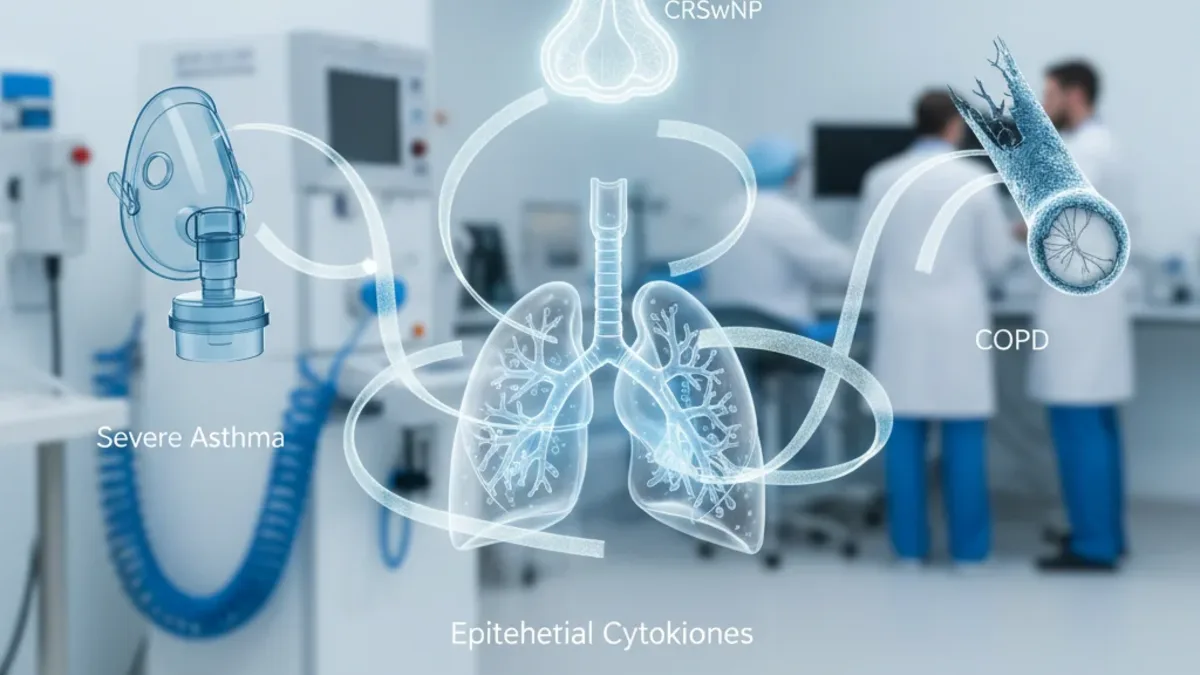
Epithelial Cytokines Link Severe Asthma, CRSwNP, COPD at ATS 2026
ATS 2026 highlighted epithelial cytokine pathways as a common link in severe asthma, chronic rhinosinusitis with nasal polyps (CRSwNP), and COPD.
 Asthma
Triple Therapy in Asthma: Real-World Evidence Supports Earlier Use
New real-world evidence presented at ATS 2026 indicates that initiating triple therapy earlier in asthma management may improve patient outcomes.
 Asthma
AIRSUPRA® Reduces Asthma Exacerbations in ATS 2026 Data
AIRSUPRA® (albuterol/budesonide) demonstrated a reduction in asthma exacerbations, addressing the need for improved rescue therapy.
 COPD
COPDIL-33's Dual Role in COPD: Inflammation and Mucus Dysfunction
IL-33 acts as both a pro-inflammatory cytokine and a contributor to mucus hypersecretion in COPD, complicating therapeutic targeting.
 Cystic Fibrosis
AATD: Aiming for AAT Restoration and Clinically Meaningful Endpoints
Advancements in Alpha-1 Antitrypsin Deficiency (AATD) focus on restoring AAT levels and achieving clinically meaningful endpoints.
 Asthma
New Biologic Offers Option for Severe Eosinophilic Asthma
A new biologic agent presented at ATS 2026 provides an additional treatment option for patients with severe eosinophilic asthma.
 Pulmonary Hypertension
IKT-001 Adaptive Study Programme for Pulmonary Arterial Hypertension
An adaptive clinical study programme for IKT-001 in Pulmonary Arterial Hypertension (PAH) was presented at ATS 2026, detailing a novel approach to trial design.
 Respiratory Tract Infections
Pediatric Pulmonary Research Gaps Highlighted for Global Health
A review of pediatric pulmonary research emphasizes significant disparities in global health and underserved populations, underscoring critical unmet needs.
 Graft Rejection
AI Algorithms Enhance Pulmonary Disease Management at ATS 2026
Artificial intelligence applications in pulmonary medicine, presented at ATS 2026, demonstrate utility in diagnosis, prognosis, and treatment optimization.
 Acute Respiratory Distress Syndrome
Acute Respiratory Failure: Lifespan Phenotypes and Trajectories
Acute respiratory failure (ARF) presents distinct physiological phenotypes and trajectories across pediatric and adult populations, necessitating age-specific management.