Loading articles...
 Pulmonary Hypertension
ATS 2026: NTM Lung Disease Detection, Therapy, QoL Advancements
ATS 2026 highlights advancements in nontuberculous mycobacteria (NTM) lung disease, focusing on improved detection, optimized therapy, and patient quality of life.
 Bronchiectasis
BRINSUPRI® First Therapy Approved for NCFB at ATS 2026
BRINSUPRI® receives first approval for non-cystic fibrosis bronchiectasis (NCFB), addressing a significant unmet need in chronic respiratory care.
 Asthma
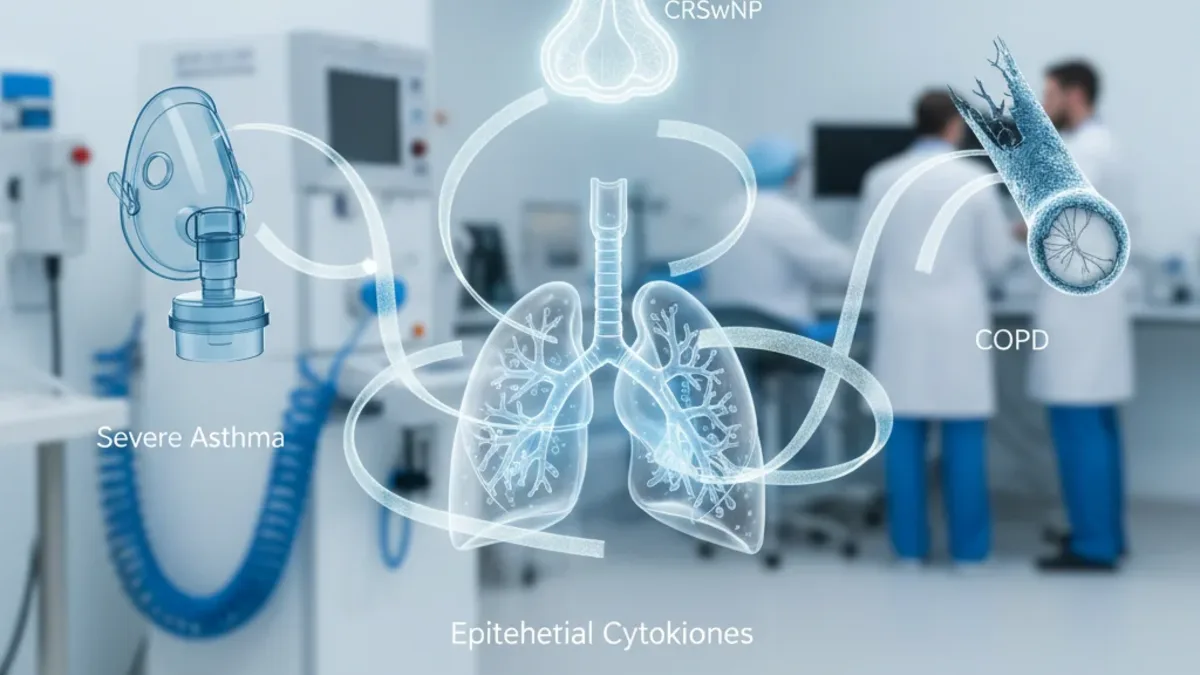
Epithelial Cytokines Link Severe Asthma, CRSwNP, COPD at ATS 2026
ATS 2026 highlighted epithelial cytokine pathways as a common link in severe asthma, chronic rhinosinusitis with nasal polyps (CRSwNP), and COPD.
 Asthma
Triple Therapy in Asthma: Real-World Evidence Supports Earlier Use
New real-world evidence presented at ATS 2026 indicates that initiating triple therapy earlier in asthma management may improve patient outcomes.
 Pulmonary Hypertension
YUTREPIA® (treprostinil) Inhalation Powder for PH-ILD Patients
YUTREPIA® (treprostinil) inhalation powder offers a new prostacyclin treatment option for pulmonary hypertension associated with interstitial lung disease (PH-ILD).
 Idiopathic Pulmonary Fibrosis
IPF/PPF: Patient and Pulmonologist Perspectives Highlight Care Gaps
New insights from ATS 2026 reveal significant discrepancies between patient experiences and pulmonologist perceptions in IPF and PPF management.
 COPD
COPDAAT Protein's Role in Lung Health Beyond COPD & Severe Asthma
Alpha-1 antitrypsin (AAT) protein extends its protective role beyond established AAT deficiency, influencing general lung health.
 Asthma
Epithelial Dysfunction: A Unified Target in Airway Disease Management
ATS 2026 highlights epithelial dysfunction as a central mechanism in upper and lower airway inflammation, informing evolving management strategies.
 Asthma
AIRSUPRA® Reduces Asthma Exacerbations in ATS 2026 Data
AIRSUPRA® (albuterol/budesonide) demonstrated a reduction in asthma exacerbations, addressing the need for improved rescue therapy.
 COPD
COPDIL-33's Dual Role in COPD: Inflammation and Mucus Dysfunction
IL-33 acts as both a pro-inflammatory cytokine and a contributor to mucus hypersecretion in COPD, complicating therapeutic targeting.