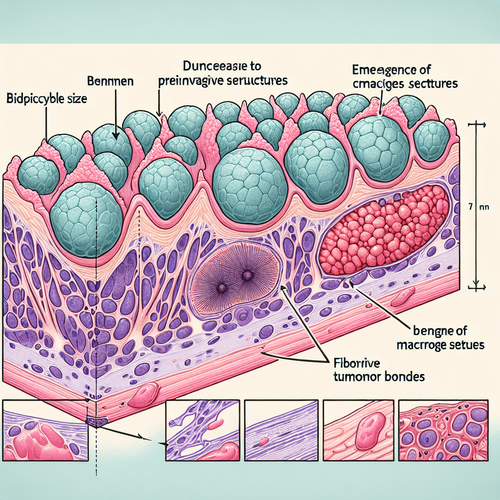
Adipocytes are integral components of the breast stroma, shaping the local milieu that surrounds in-situ and invasive lesions. Yet descriptive terminology for adipocyte changes is often inconsistent, making it difficult to compare findings across cases, institutions, or studies. A curated compendium of adipocyte morphologies across different breast pathologies consolidates definitions, microanatomic context, and recognition cues to promote a shared vocabulary. By aligning terms with reproducible features visible on routine stains, the resource helps close the gap between qualitative impressions and structured reporting. The resource is accessible via PubMed at https://pubmed.ncbi.nlm.nih.gov/41055253/.
This article distills pragmatic takeaways for practicing pathologists and multidisciplinary care teams. We summarize key adipocyte patterns, offer recognition and documentation tips for routine workflows, and outline where standardized descriptions can aid communication, synoptic reporting, and research-ready data. What follows emphasizes practical cues, terminology alignment, and points of integration that support consistent, outcome-oriented practice.
Why adipocyte morphology matters in breast pathology
In the evaluation of breast neoplasms, the stroma is not a bystander. Adipocytes abut ducts, lobules, and invasive fronts, and their morphologies can reflect local biology and injury. As part of the tumor microenvironment, they interact with immune cells, fibroblasts, and epithelium, shaping both morphology and signaling. A shared lexicon for adipocyte changes helps convert descriptive impressions into reproducible, communicable findings. Standardized terms also ease data abstraction, enabling comparison across cases and cohorts.
A shared vocabulary for consistent reporting
Clinical reports often mention adipocyte size variation, necrosis, or stromal reaction, but the words used can vary widely. A consolidated, definition-first lexicon clarifies what features to look for and how to name them, reducing ambiguity. This improves communication among pathologists, radiologists, surgeons, and oncologists by aligning observations with predictable meanings. It also facilitates quality initiatives focused on interobserver agreement and structured data collection. When a term maps to a specific, visually anchored pattern, it can be counted, compared, and correlated more reliably.
Core patterns described in the compendium
The curated set of morphologies organizes adipocyte changes by recognizable patterns on routine stains. Commonly encountered descriptors include hypertrophic adipocytes, atrophic or compressed adipocytes, lipophages and foamy macrophages adjacent to fat injury, and crown-like aggregates of inflammatory cells around adipocytes. Additional patterns include adiponecrosis with ghost-like fat cells, calcification within fat necrosis, fibrous septal thickening, and adipocyte fragmentation. Vascular-adjacent adipocyte changes, interface changes at tumor borders, and periductal or perilobular adipocytic remodeling are also defined for clarity.
- Hypertrophic adipocytes: enlarged cells with expanded clear cytoplasmic vacuoles and thin peripheral cytoplasm, often accentuating size disparity with neighbors.
- Atrophic or compressed adipocytes: small, distorted cells at pressure points, including around dense fibrosis or nodules.
- Adiponecrosis: disrupted adipocytes with granular debris, occasional calcification, and associated histiocytic response.
- Lipophages and crown-like structures: foamy macrophages encircling or replacing adipocytes, commonly at sites of injury or active remodeling.
- Septal fibrosis and stromal remodeling: thickened fibrous bands intersecting fat lobules, sometimes with myofibroblastic features.
These patterns are not mutually exclusive and may coexist in the same slide or region. The lexicon provides microanatomic context, such as localization at the invasive front, around prior biopsy tracts, or adjacent to treatment effects. It also encourages documenting distribution, extent, and association with other stromal or epithelial features. Clear definitions allow such detail to be concise and comparable across reports. Consistency is the value proposition: once a term is defined, it can be reliably re-used and audited.
Recognition and description on routine slides
Reliable recognition begins at low power with a broad survey of fat compartments relative to ducts, lobules, scars, and tumor borders. Adipocyte size variation, presence of foamy histiocytes, and the architecture of fibrous septa can often be appreciated at scanning magnification. A second pass at intermediate power highlights crown-like structures, discrete foci of adiponecrosis, and the sharpness of interfaces between tumor and adipose tissue. At high power, nuclear and cytoplasmic details help distinguish macrophage-rich injury from subtle treatment effects or chronic scarring. Integrating observations across these scales makes final descriptors more robust.
Low-power survey and context
When scanning, note where adipose tissue sits relative to biopsy tracts, clips, scars, and areas of prior intervention. This context helps separate spontaneous fat injury from procedure-related change, which can look similar in isolation. Estimate the proportion of the tumor perimeter that interfaces with adipose tissue, and whether the boundary is smooth, jagged, or infiltrative. Map regions of adipocyte enlargement or compression, since distribution patterns can be as informative as any single focus. Finally, mark candidate areas for high-power confirmation to minimize bias toward the most conspicuous fields.
High-power features and differential diagnosis
At higher magnification, look for subtle cytoplasmic debris and the morphology of foamy macrophages to anchor a diagnosis of adiponecrosis. Confirm that apparent aggregates of inflammatory cells truly encircle an adipocyte to support a crown-like pattern, rather than simply abutting fibrous septa. Distinguish compression from true atrophy by assessing shape distortion and adjacent scarring. When tumor cells align along adipose septa or insinuate between adipocytes, document the interface pattern with a standardized phrase. If calcifications are present, describe their relationship to fat injury versus ductal or lobular calcifications to avoid confusion on imaging correlation.
Quantification and reproducibility
Where feasible, record presence, focality, or semiquantitative extent of key patterns using simple, auditable rules. For example, crown-like structures present in at least one well-preserved low-power field can be logged as present, while diffuse adiponecrosis spanning multiple contiguous fields can be recorded as extensive. These operational definitions can support audits of interobserver agreement and help push descriptions toward structured fields. If your laboratory uses digital pathology, consider annotating representative fields and leveraging measurement tools to capture adipocyte diameter or septal thickness. Simple, repeatable thresholds are preferable to complex scoring systems that are difficult to train and maintain.
Documentation should also reflect preanalytic and clinical context. Prior procedures, neoadjuvant therapy, radiation, or biopsy-related hemorrhage may all reshape adipose morphology. Patient factors such as body mass index and metabolic comorbidities can modulate adipocyte size and the prevalence of crown-like structures. Note these considerations in free text if they plausibly inform interpretation. Avoid overattribution by anchoring each call to clear, slide-based evidence and a defined term from the lexicon.
Pitfalls and misclassifications
Fragmentation artifacts can mimic adiponecrosis when tissue handling is suboptimal, especially in fatty cores. Distinguish true necrosis by confirming debris, histiocytic response, or calcification rather than relying on irregular vacuolar outlines alone. Foamy macrophages in chronic inflammation adjacent to ducts can masquerade as crown-like structures if the central adipocyte is not verified. Dense fibrosis can compress adipocytes and produce apparent atrophy, which should be coded as compression when feasible to preserve mechanistic clarity. Reproducibility improves when each descriptor requires a specific anchor feature rather than a gestalt impression.
Integrating into reports and clinical workflows
Once recognition cues are aligned to definitions, integration into routine reporting can be lean and fast. The goal is not to lengthen reports but to replace vague phrases with standardized descriptors that carry consistent meaning. Teams can adopt a short list of high-value fields, such as adiponecrosis, crown-like structures, septal thickening, and interface pattern, each recorded as absent, focal, or extensive. Free text can then summarize distribution and context, such as proximity to biopsy tracts or therapy effects. This hybrid approach combines structure with clinical nuance.
Reporting templates and synoptic addenda
Pathology templates or synoptic addenda can include a compact adipose section with optional fields. Many cases will warrant a simple present or absent call for two or three patterns, while complex resections may benefit from more detail. For example, a lumpectomy with prior core biopsy might document adiponecrosis and crown-like structures at the biopsy site, septal fibrosis adjacent to scar, and a smooth tumor-adipose interface elsewhere. These inputs can be recorded alongside other stromal observations such as desmoplasia or lymphoid aggregates. Over time, structured fields enable audits and retrospective reviews with minimal added burden at sign-out.
Clinical communication and multidisciplinary alignment
Radiologists, surgeons, and oncologists rely on concise, interpretable pathology language that maps to imaging and clinical scenarios. Identifying fat necrosis and its calcific evolution can explain imaging findings and reduce uncertainty on follow-up. Noting a smooth versus infiltrative interface at the tumor-fat boundary can support surgical margin discussions. When adipocyte-associated inflammation is prominent, communicating it as crown-like structures rather than generic inflammation clarifies likely origin and distribution. These consistent terms shorten conversations and reduce misinterpretation across disciplines.
Research-ready data and standardization
Structured adipocyte descriptors create opportunities for exploratory analyses across cohorts and time. Teams interested in biomarker validation can test whether specific adipose patterns correlate with immune infiltrates, stromal signatures, or outcomes in a way that is reproducible across institutions. In entities such as triple-negative breast cancer, where the microenvironment can be particularly active, standardized adipocyte features may add orthogonal information to existing stromal metrics. When the same lexicon applies across practice settings, pooled data become more feasible and reliable. Common definitions are the prerequisite for external validity.
Digital tools and automation
As laboratories adopt digital pathology, adipocyte morphology is amenable to annotation and measurement. Simple circle or polygon tools can approximate adipocyte diameters, while area tools quantify fat necrosis or fibrotic bands. Beyond manual capture, computer vision models can be trained to detect adipocytes and adjacent histiocytes, augmenting consistency and speed. Such models may ultimately assist in quantifying crown-like structures or estimating adipocyte size distributions at scale. Careful curation and consensus-labeled data, using the shared lexicon, will remain the cornerstone of reliable machine learning outputs.
Linking pathology to clinical context
Adipocyte morphologies do not exist in a vacuum and should be interpreted alongside clinical history. Prior procedures, endocrine therapy, chemotherapy, or radiation can all imprint the stroma in recognizable ways. When morphologies mirror expected treatment effects, naming them precisely strengthens clinicopathologic correlation and supports shared decision-making. Conversely, discordant findings may prompt a second look at imaging or correlate with an alternative process. These feedback loops are most effective when reports use terms that the entire team recognizes and trusts.
Education, quality, and QA
Adopting a common lexicon is also an educational opportunity. Resident slide sessions can focus on a handful of patterns with images anchored to definitions, making the learning curve clear. Laboratories can incorporate these terms into internal quality documents to support peer review and consensus discussions. Periodic audits can assess completeness and consistency, driving targeted feedback where needed. Such approaches align with broader quality goals and strengthen the interpretive fabric of the service.
Limitations and future directions
Even with crisp definitions, morphologic spectra can blur at the edges, and not every case will fit neatly into a single label. Some descriptors may require refinement as laboratories gain experience applying them prospectively. Quantification thresholds that are practical in one setting may be onerous in another, necessitating local adaptation without eroding core definitions. Clinical associations, while promising, will require careful study design to avoid confounding by sampling, therapy, or comorbidity. Over time, multicenter efforts using the same lexicon can clarify which adipocyte features add the most value to diagnosis, communication, and outcomes.
In sum, a practical lexicon for adipocyte morphology anchors pattern recognition to shared definitions that serve both clinical care and research. Pathologists can integrate a small set of high-yield, standardized terms into routine reports without increasing workload, improving clarity for multidisciplinary teams. Structured descriptors enable reproducibility, efficient audits, and pooled analyses, especially when paired with digital tools and simple quantification rules. While limitations and gray zones remain, the direction of travel is clear. Clarity in language is the foundation for consistency in care, and adipocyte morphology is now better equipped to contribute to that goal.
LSF-3247364704 | October 2025

How to cite this article
Reed E. Adipocyte morphology in breast pathology: a practical lexicon. The Life Science Feed. Published November 27, 2025. Updated November 27, 2025. Accessed April 1, 2026. https://thelifesciencefeed.com/oncology/breast-neoplasms/practice/adipocyte-morphology-in-breast-pathology-a-practical-lexicon.
Copyright and license
© 2026 The Life Science Feed. All rights reserved. Unless otherwise indicated, all content is the property of The Life Science Feed and may not be reproduced, distributed, or transmitted in any form or by any means without prior written permission.
Fact-Checking & AI Transparency
This content was produced with the assistance of AI technology and has been rigorously reviewed and verified by our human editorial team to ensure accuracy and clinical relevance.
References
- A compendium of adipocyte morphologies across different breast pathologies. https://pubmed.ncbi.nlm.nih.gov/41055253/.