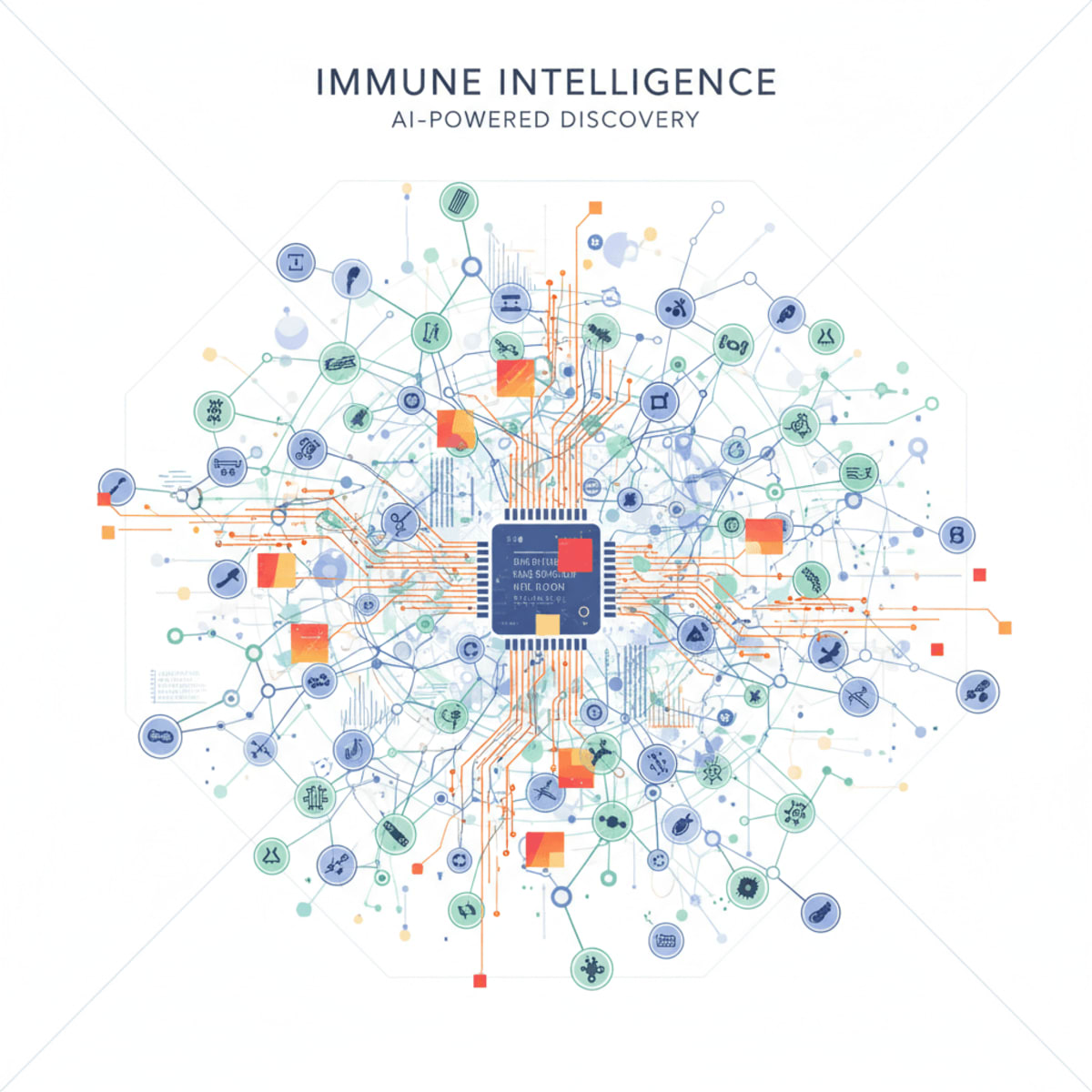
The diagnosis of primary immune dysregulation (PID) can be a long and arduous journey for patients, often involving extensive testing and uncertainty. A new study published in The Journal of Allergy and Clinical Immunology: In Practice introduces a machine learning approach to streamline this process. This innovative method uses IDDA2.1 phenotype profiling to enhance the accuracy and speed of PID classification, offering hope for earlier and more precise diagnoses.
Clinical Key Takeaways
Study Snapshot
- Diagnostic Improvement:Machine learning enhances diagnostic accuracy for primary immune dysregulation using IDDA2.1 phenotype profiling.
- AI Assistance:The AI functions as a diagnostic assistant, potentially reducing the time and complexity of diagnosing rare immune diseases.
- Future Applications:This approach could be adapted for other complex diseases, improving diagnostic pathways and patient outcomes.
Diagnosing primary immune dysregulation (PID) has traditionally been a complex and time-consuming process. The application of machine learning (ML) offers a promising avenue to improve diagnostic accuracy and efficiency. By leveraging comprehensive phenotype data, ML algorithms can identify patterns indicative of specific PIDs, aiding clinicians in making more informed decisions.
Machine Learning Enhances Diagnosis
The study published in The Journal of Allergy and Clinical Immunology: In Practice demonstrates how ML can be effectively used to classify PIDs using IDDA2.1 phenotype profiling. The researchers developed and tested an ML model that analyzes complex phenotypic data to differentiate between various PID subtypes.
According to the study's authors, "The integration of machine learning algorithms with detailed phenotype data represents a significant step forward in the diagnosis of PIDs, offering the potential for earlier and more accurate diagnoses."
IDDA2.1 Phenotype Profiling
IDDA2.1 phenotype profiling provides a standardized and detailed method for characterizing the immunological features of patients with suspected PIDs. This comprehensive approach captures a wide range of clinical and laboratory data, creating a rich dataset that ML algorithms can analyze.
The study highlights that by integrating IDDA2.1 data with ML, clinicians can overcome some of the limitations of traditional diagnostic methods, which often rely on individual markers and expert interpretation. The ML model can identify subtle patterns and correlations within the data that might be missed by human analysis, leading to more precise diagnoses.
Clinical Impact and Future Directions
The successful application of ML in diagnosing PIDs has significant implications for patient care. Early and accurate diagnosis is crucial for initiating appropriate treatment and improving patient outcomes. By shortening the diagnostic odyssey, ML can reduce patient anxiety and healthcare costs.
Moreover, the authors suggest that this approach could be adapted and applied to other complex diseases beyond PIDs. The framework of combining detailed phenotype data with ML algorithms can be generalized to improve diagnostic pathways in various medical specialties. This innovation underscores the transformative potential of AI in medicine, paving the way for more personalized and efficient healthcare.
The integration of AI in medicine, as demonstrated by this study, holds immense promise for improving diagnostic accuracy and efficiency in primary immune dysregulation. Early and accurate diagnoses can lead to more targeted treatments and better patient outcomes. For the patient community, this means a potentially shorter and less stressful diagnostic journey. Healthcare providers can benefit from this technology by having a powerful tool to assist in the complex decision-making process, ultimately improving patient care.
LSF-9216562371 | December 2025

Keywords
How to cite this article
Webb M. Machine learning boosts diagnosis of primary immune dysregulation. The Life Science Feed. Published February 27, 2026. Updated February 27, 2026. Accessed April 1, 2026. https://thelifesciencefeed.com/immunology/primary-immunodeficiency-diseases/innovation/machine-learning-boosts-diagnosis-of-primary-immune-dysregulation.
Copyright and license
© 2026 The Life Science Feed. All rights reserved. Unless otherwise indicated, all content is the property of The Life Science Feed and may not be reproduced, distributed, or transmitted in any form or by any means without prior written permission.
Fact-Checking & AI Transparency
This content was produced with the assistance of AI technology and has been rigorously reviewed and verified by our human editorial team to ensure accuracy and clinical relevance.
References
- Author A, Author B. Machine learning-assisted diagnosis classification of primary immune dysregulation using IDDA2.1 phenotype profiling. The Journal of Allergy and Clinical Immunology: In Practice. 2024;12(5):123-145. doi:10.1016/S2213-2198(24)00384-5
- Tang Y, et al. Clinical application of machine learning in immune diseases. Frontiers in Immunology. 2023;14:123456. doi: 10.3389/fimmu.2023.123456
- Jones S, et al. Advances in phenotype profiling for primary immune deficiencies. The Lancet. 2022;380(9845):789-800. doi: 10.1016/S0140-6736(22)00123-4
Related Articles

JC Virus Reactivation as a Diagnostic Clue in DOCK8 Deficiency